Dear Diary,
When I was a child, I used to be a voracious reader. Reading was one of my ways of escaping. What from, you might ask. I was trying to escape the chaos at home. Growing up, my parents fought often. They were young and still learning how to have a family. A brief respite from the chaos was my grandma. On the weekends, I had the liberty to go stay with her. She was my safe space. Living with her was different, if only for a weekend. First, she was an early riser. I enjoyed the mornings with her (actually, mornings are one of many things that I enjoyed with her). The mornings were still, and she would embroider. In the afternoon, we went on walks in the neighborhood. Sometimes her friend came over, and they did more embroidering. Her place was small and very quiet; It was cozy. I can’t remember what I did while beside her, but I loved to be in her company.
During the weekdays, it was quite hectic. I’d wake up in the middle of the night to my parents fighting. It was hard as I was the first child and my only other sibling was still a baby. There was no consolation for me. Thus, reading became my haven. I remembered the first time I learned to sound out words at school. The same night, I began to practice. I figured it out real fast and started reading as much as I could. There was not a lot of readers in my family and whatever books there were, was stashed away somewhere. I would dig through the closets to find books and read it. When I visited my cousins, I would see what books they had hiding in their closets, too. It was sort of an obsession. I basically consumed almost anything that I could find and read.
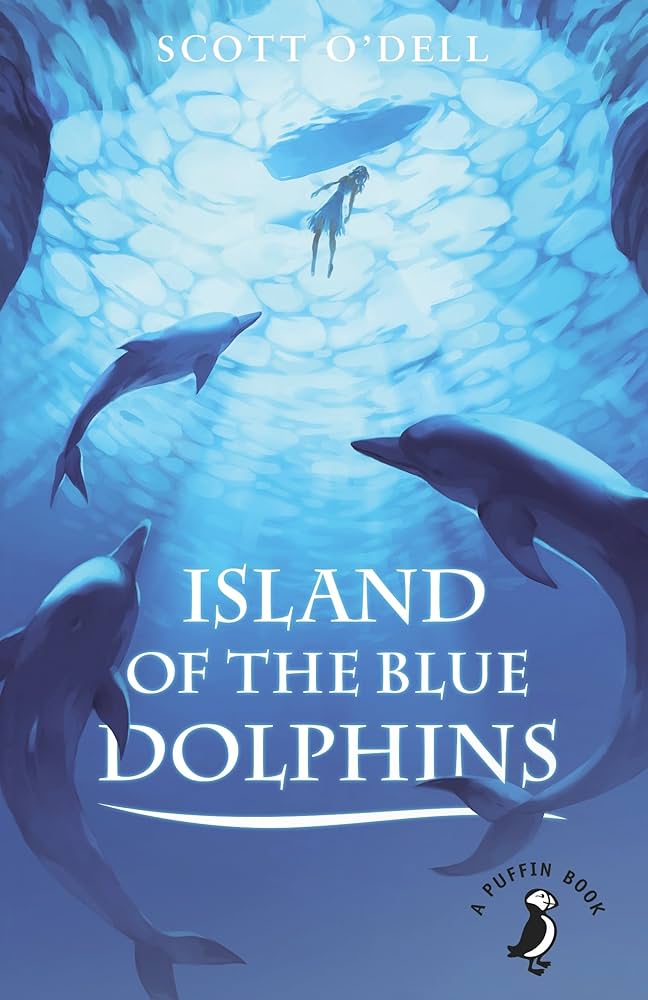
Once, my uncle who was only a few years older than me, gifted me a small collection of Newberry Medal books. The books were a bit too mature for me and so I found some of the topics boring or difficult to understand, such as “A Wrinkle in Time” by Madeleine L’Engle or “The Black Pearl” by Scott O’Dell. The few books I did manage to read were amazing. The stories are ingrained in my mind. One of the most memorable one was “Island of the Blue Dolphin.” It was about a native American girl named Karana who is separated from her tribe and stranded alone on an island off the California coast. I remember being captured by her tenacity and bravery. She was strong and persevered even when she had every reason to lose hope. I spent the summer going through the stack of books and “Island of the Blue Dolphin” is one of the first narratives that shaped my understanding of a strong woman.
When my grandmother passed away, I felt like I’d lost everything and anything that mattered to me. I wasn’t close to my parents. My mother wasn’t affectionate. My father bonded with me but he never knew how to handle my feelings. My grandmother was the pillar to my emotional and internal self. She was sick for a long time. I knew it was coming but I didn’t know how to process it. I pretended that she was fine and everything was the same. It wasn’t. After her funeral, I drowned myself in binging shows without giving myself any chance to feel or think anything. I rarely ever picked up a book again, unless it was for school. Reading never really felt the same after.
For a long time, living felt like going through the motions. I dreaded waking up most days. School was a blur. It hurt all the time. I was severely depressed.
Things started looking up for me when I turned 17. Beyond feeling hurt and being depressed, I started to feel my feelings, good and bad. I could decipher each one. It made me human again.
I’m in college now and I want to pick up the hobby of reading. This is a desire that’s been brewing for a while. Throughout the past 3 years, I’ve picked up a few self-help books here and there, but it didn’t stick. I’ve even picked up a romance book or two from Barnes and Nobles. I find that I am much too critical to enjoy the writing of romance novels. I am quite an analytical reader and feel dissatisfied at the choices of the author’s writing. It is no fault of theirs; I am merely not the target audience.
Eventually, I turned my attention to classic literature. The appeal with classic literature is that they are thought provoking, outlasted time and known for their stellar, story-telling. You might think that I am stuck up or hear that I am better than “trashy romances” but not at all. I simply am appealing to my own desire for knowledge. Truly, my interest in picking up reading again is because I value a sharp mind and the power of an education. Plus, reading is the antithesis to today’s brain rot. I can really delve deep here into the value of an education but it would take us off the course of discussing books. Despite wanting to be a person who is easygoing and approachable, it is hard to deny certain traits of mine that automatically paints me in a intimidating manner. In the same way that a muscular jock can be assumed to be insensitive and aggressive, a scholar can be assumed to be condescending and serious (I am the scholar in this case). I find it quite difficult to be approachable despite viewing myself as nonjudgemental and friendly. Anyways, I forget where I was going with this. Oh yeah, my brain has been very bored for a few years and is looking for some practice. The goal here is to pick up reads that are stimulating for my obsessive brain and in doing so, sharpen my critical thinking skills
Here comes the questions. What is classic literature? Where do I begin? What are some “must reads”? Why should I even read them? I don’t know the answers to these and so I dug up some answers on the trusty, dusty, internet (but not AI, which I find to be quite scandalous.)
According to Panmacmillan.com, classic literatures is:
“…a classic novel is a book that has stood the test of time because it’s so good; it has a gripping story which is expertly crafted and brilliantly expressed. But of course, it’s not just about the story. Like any good recipe, there are a number of key ingredients that make a book a classic…”
Not to be confused with classical literature, which comprises of the great works from ancient civilizations like the Greeks, Romans and such (thoughtco.com). Classics are books that write about universal themes such as love, adversity, and morality. They are inventive, the first of its kind, or influential in some way. Despite all these formal definitions, I still don’t know who makes the rules or decides if a book is a classic but to sum up, they are books that are well written and very popular even after the author has passed.
The more I dig into classic literature, I realized I’ve read so many classics growing up. Classics are written into the school curriculum because obviously, they are great teaching tools. Some of my most favorite books came from my 10th grade English class. My English teacher had extraordinary taste. I still remember reading “Of Mice and Men” by John Steinbeck, “Macbeth” by Shakespeare, “Metamorphosis” by Kafka and “Their Eyes Were Watching God” by Zora Neale Hurston. The stories were personal and touching. I was immersed in the reading each time, sinking into the stories of the protagonist and watching their story unfold. I don’t remember how, but I’ve been changed by the stories.
As part of my research, I’ve come up with a list of classics I want to read eventually. Maybe you can find some that you’d be interested in yourself. I, myself being an American and a woman, want to familiarize myself with American literature and women-focused narratives. I’ve created two lists, one consisting of American Classics and a general one. These recommendations are ones I’ve found on the internet, or at bookstores.
American Classics:
- The Secret History by Donna Tart
- East of Eden by John Steinbeck
- The Grapes of Wrath by John Steinbeck
- The Adventures of Huckleberry Finn by Mark Twain
- Mody Dick by Herman Melville
- Fahrenheit 451 by Ray Bradbury
- Atlas Shrugged by Ayn Rand
- The Awakening by Kate Chopin
- Poems by Emily Dickenson
- Leaves of Grass by Walt Whitman
- Maggie a Girl of the Steets by Stephen Crane
- Bad Behavior by Mary Gaitskill
Recommendations I’ve collected:
- Great Expectations by Charles Dickens
- The Brothers Karamazov by Fyodor Dostoevsky
- Lady Chatterley’s Lover by D.H. Lawrence
- Mrs. Dalloway by Virginia Woolf
- Don Quixote by Migel de Cervantes
- Anna Karenina by Leo Tolstoy
- The Count of Monte Cristo by Alexandre Dumas and Auguste Maquet
- Nineteen Eighty-Four by George Orwell
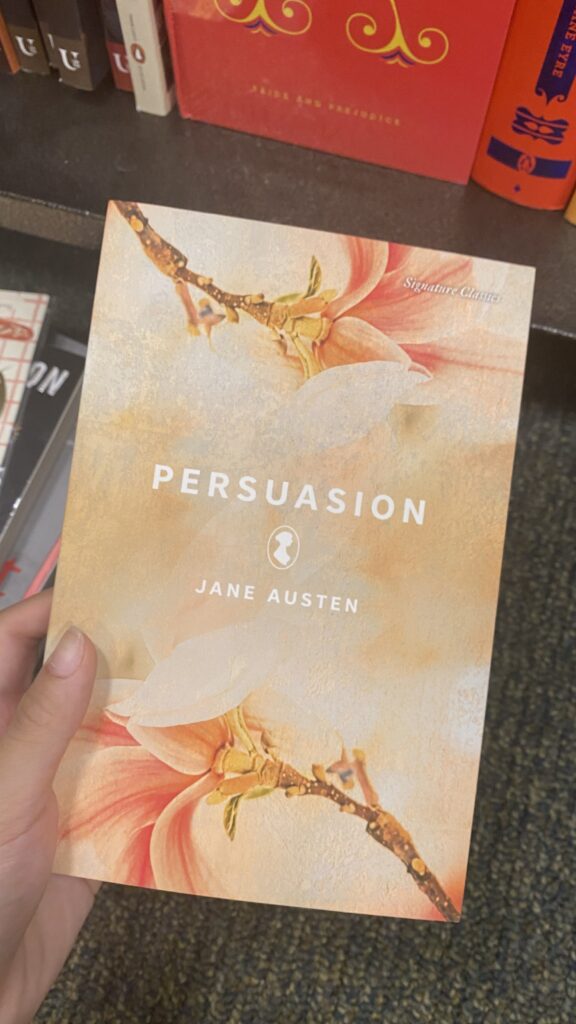
- Persuasion by Jane Austen
- A Room with a View by E.M. Foster
- The Turn of the Screw by Henry James
- All Quiet on the Western Front by Erich Maria Remarque
- War and Peace by Leo Tolstoy
- The Picture of Dorian Gray by Oscar Wilde
Currently, I am reading “The Secret History” by Donna Tart with my book club. It’s on the longer side and I am enjoying it so far. What I love particularly about the longer books is that I feel as if I am meandering through the lives of the characters. I hope to really get into the classics and to refine my understanding of human nature. I will do a couple of book reviews in the future.
Now, questions for you. Have you read any of the books on this list? What are some classics that you’ve enjoyed? Maybe you’re here because you were looking for a definitive answer to “what is classic literature?” or you’re trying to find your way around classic literature, too. Either way, I hope I’ve elicited a desire to pick up a book. Talk to you next time.
Sources
Willet-Wei, Megan. “25 American Classics Everyone Should Read At Least Once.” Business Insider, 24 January 2014, https://www. businessinsider.com/25-america-classic-books-to-read-2014-1?utm_source=feedburner&utm_medium=feed&utm_campaign=Feed%3A+businessinsider+%28Business+Insider%29&utm_content=Netvibes
Sanders, Harriet. “What makes a classic?” Pan Macmillan, 26 April 2023, https://www.panmacmillan.com/blogs/classics/ what-are-classic-books
Lombardi, Esther. “What’s the Difference Between Classical and Classi Literature?” ThoughtCo, 12 May 2025, https://www.though tco.com/what-is-classical-literature-739321